

WeGreened Approval Statistics: Week of July 7, 2025
WeGreened Weekly Approval Summary
Week of July 7–13, 2025
During this week, WeGreened received a total of 93 approval notices from the United States Citizenship and Immigration Services (USCIS). The EB-2 NIW (National Interest Waiver) remained the leading category, making up 70% of approvals. Meanwhile, EB-1A (Alien of Extraordinary Ability) maintained steady performance and continued to attract high-level scientific research professionals.
Approval Distribution by Category and Service Center
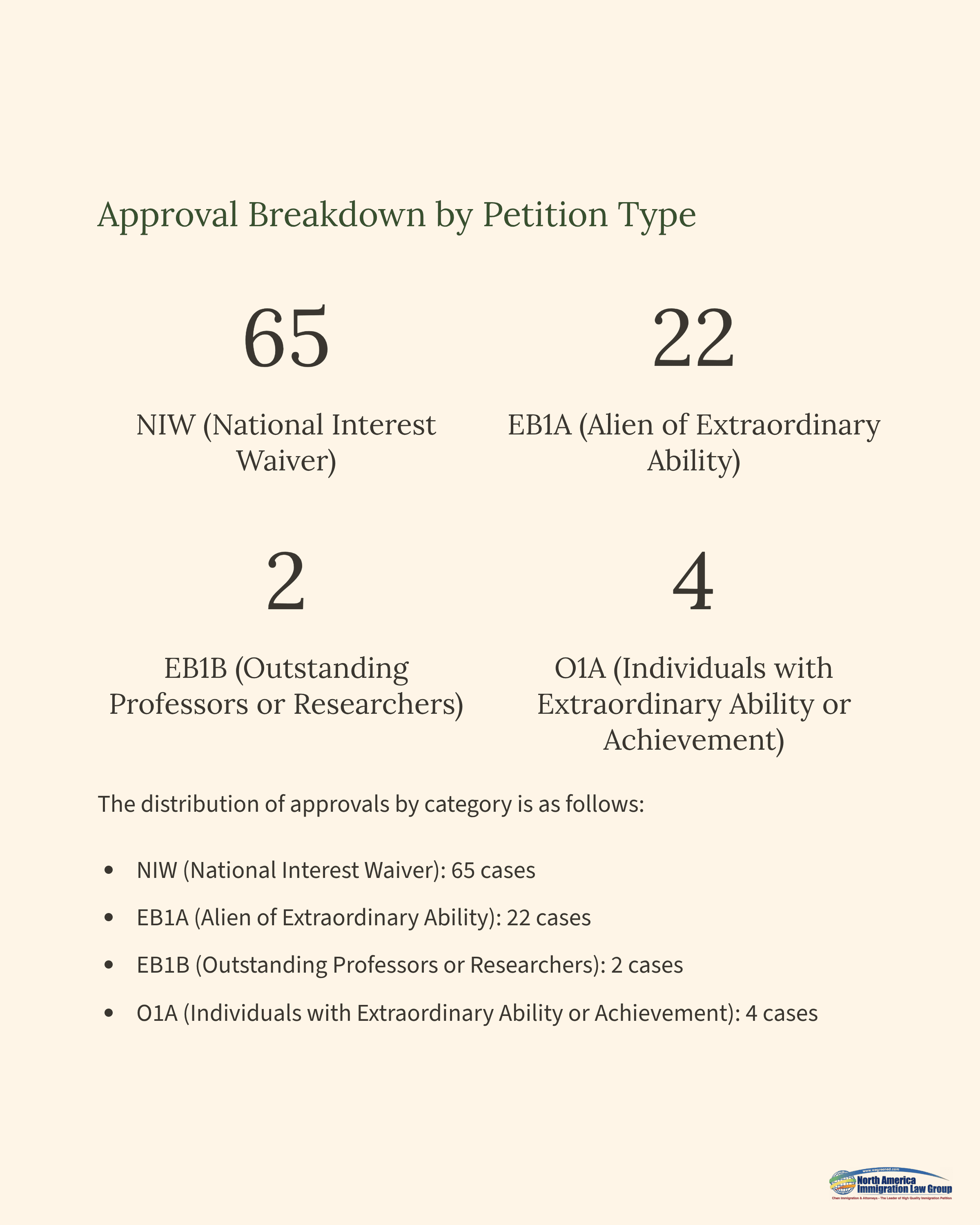
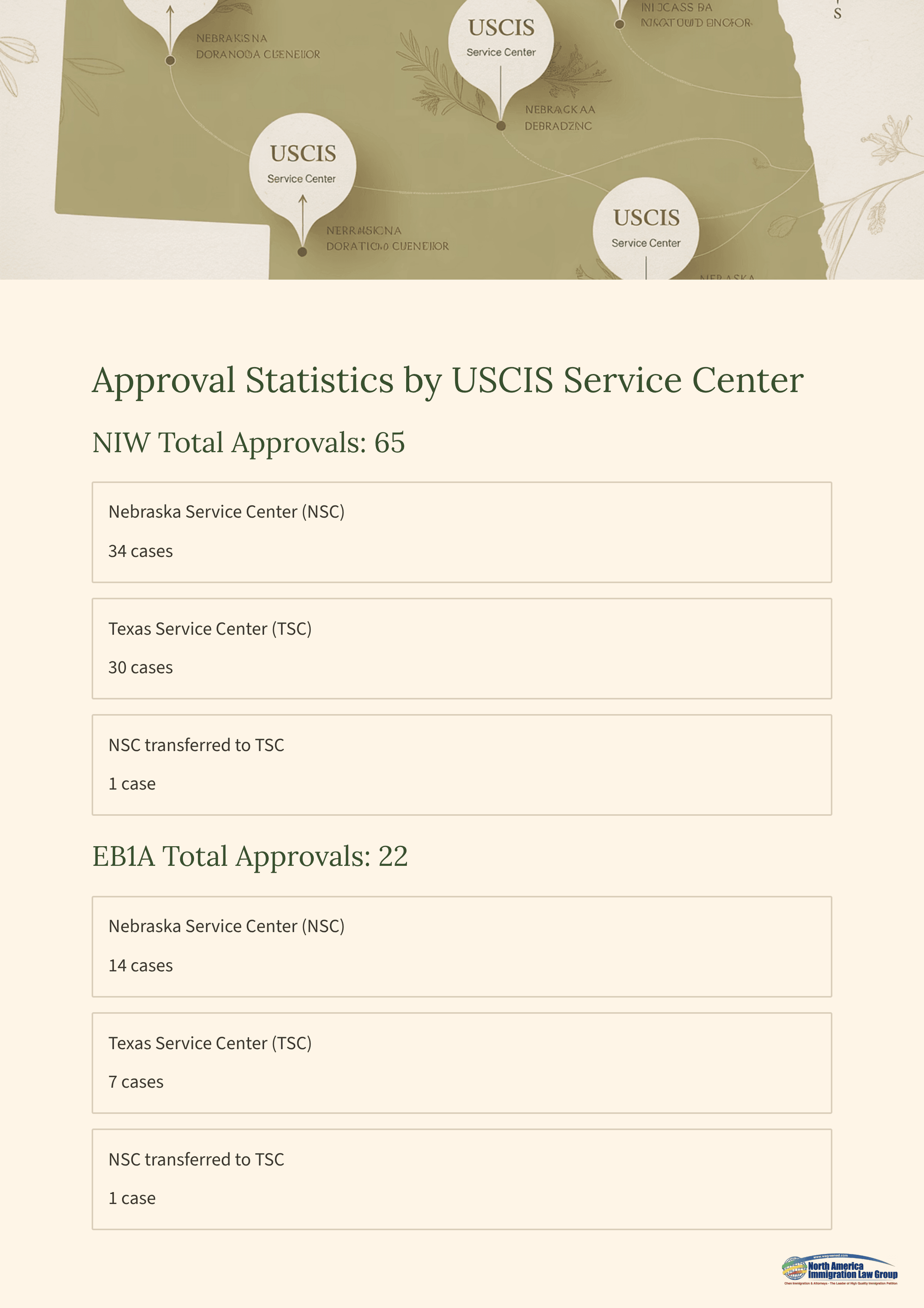
Of the 93 approvals, 65 were for NIW, 22 for EB1A, 2 for EB1B (Outstanding Professors or Researchers), and 4 for O1A (Individuals with Extraordinary Ability or Achievement). The Nebraska Service Center processed 14 EB1A and 34 NIW approvals, while the Texas Service Center handled 7 EB1A and 30 NIW. One EB1A and one NIW case were transferred from NSC to TSC.
Academic Output Quartiles
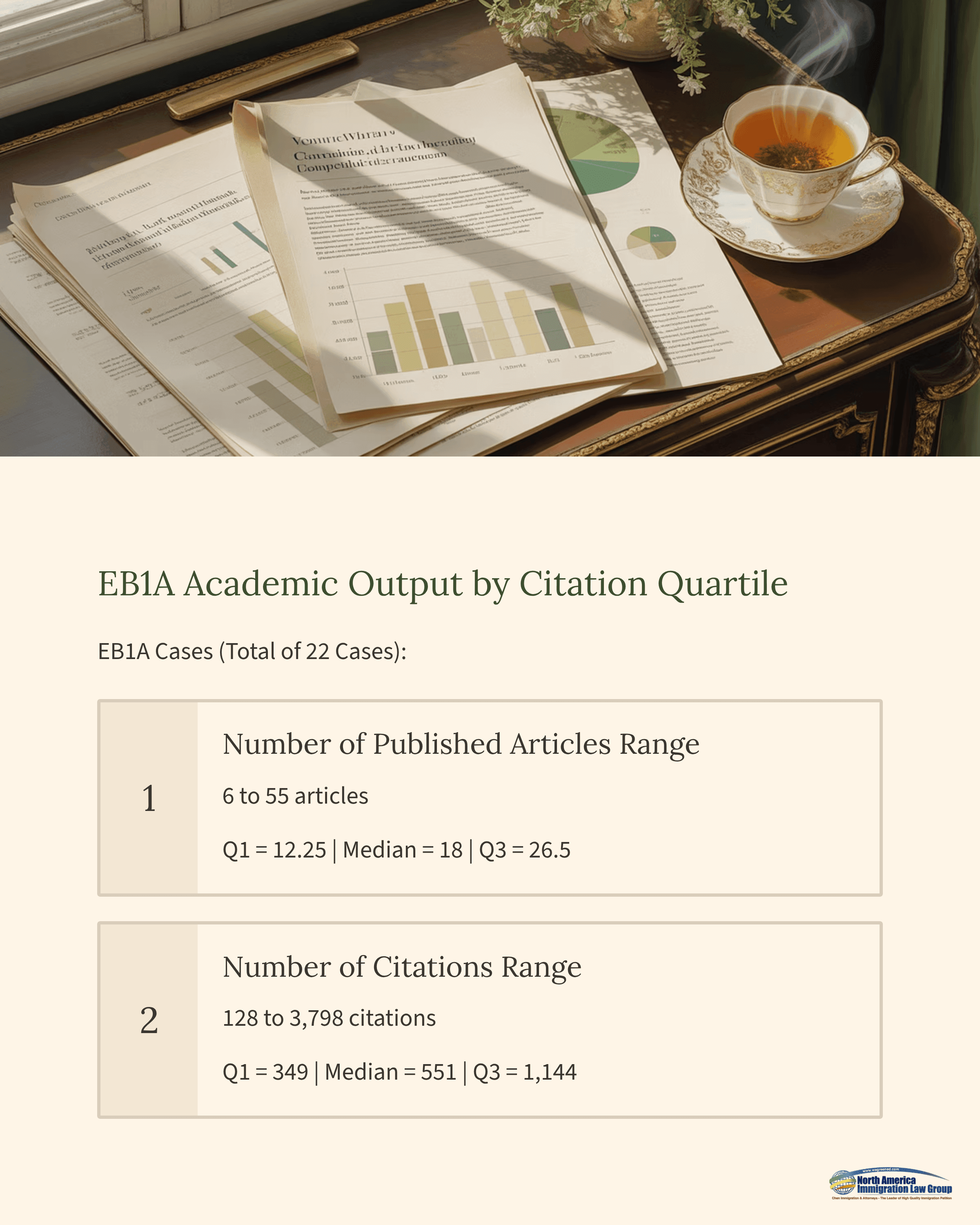
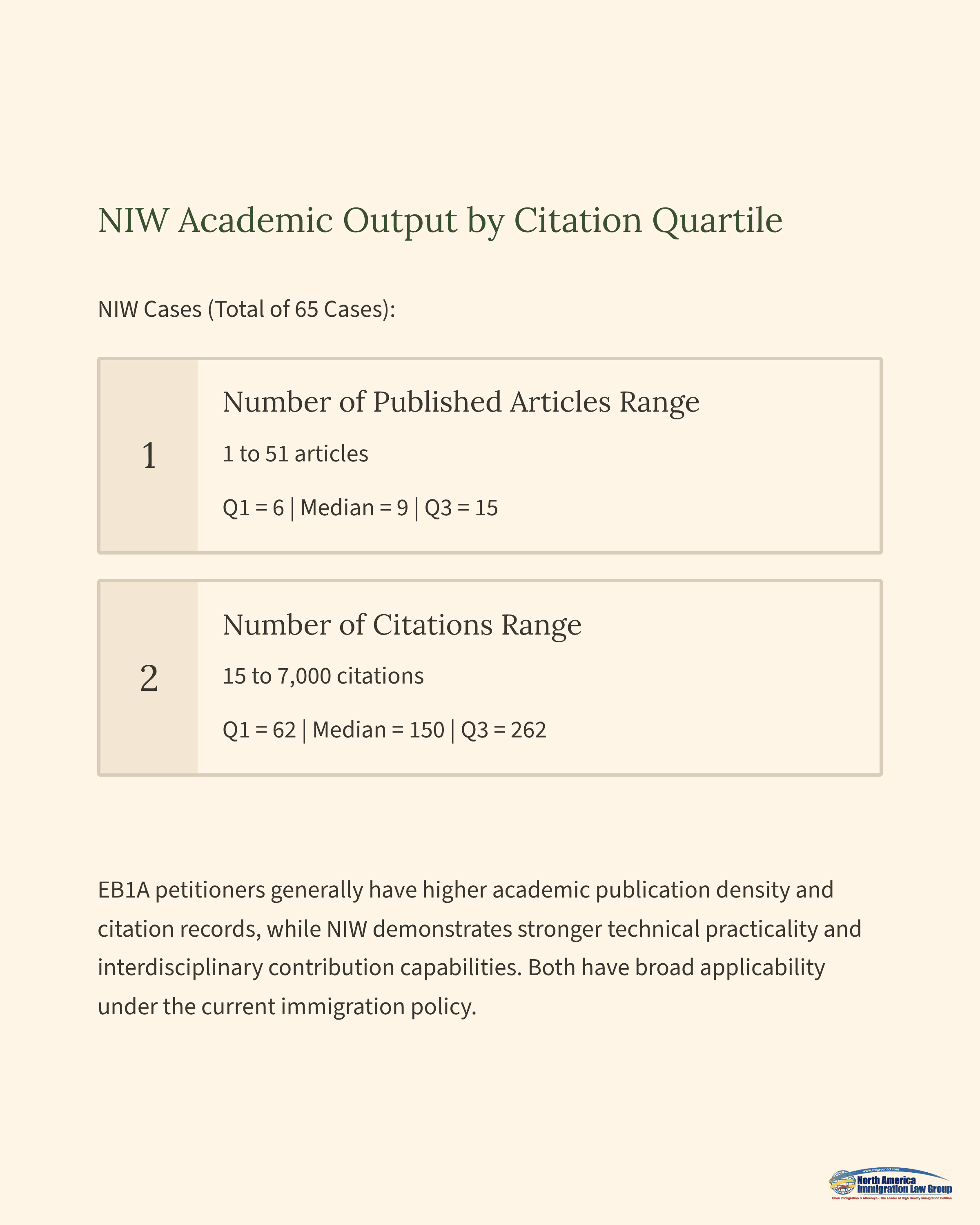
For the 22 EB1A approvals, the number of published articles ranged from 6 to 55, with the first quartile at 12.25, median at 18, and third quartile at 26.5. Citations ranged from 128 to 3,798, with quartiles at 349 (Q1), 551 (median), and 1,144 (Q3).
While EB1A petitioners typically exhibit higher density in academic publications and citations, NIW applicants often showcase stronger interdisciplinary skills and practical technical contributions. Both categories continue to demonstrate broad eligibility across various research and application domains.
Applicant Backgrounds and Research Areas
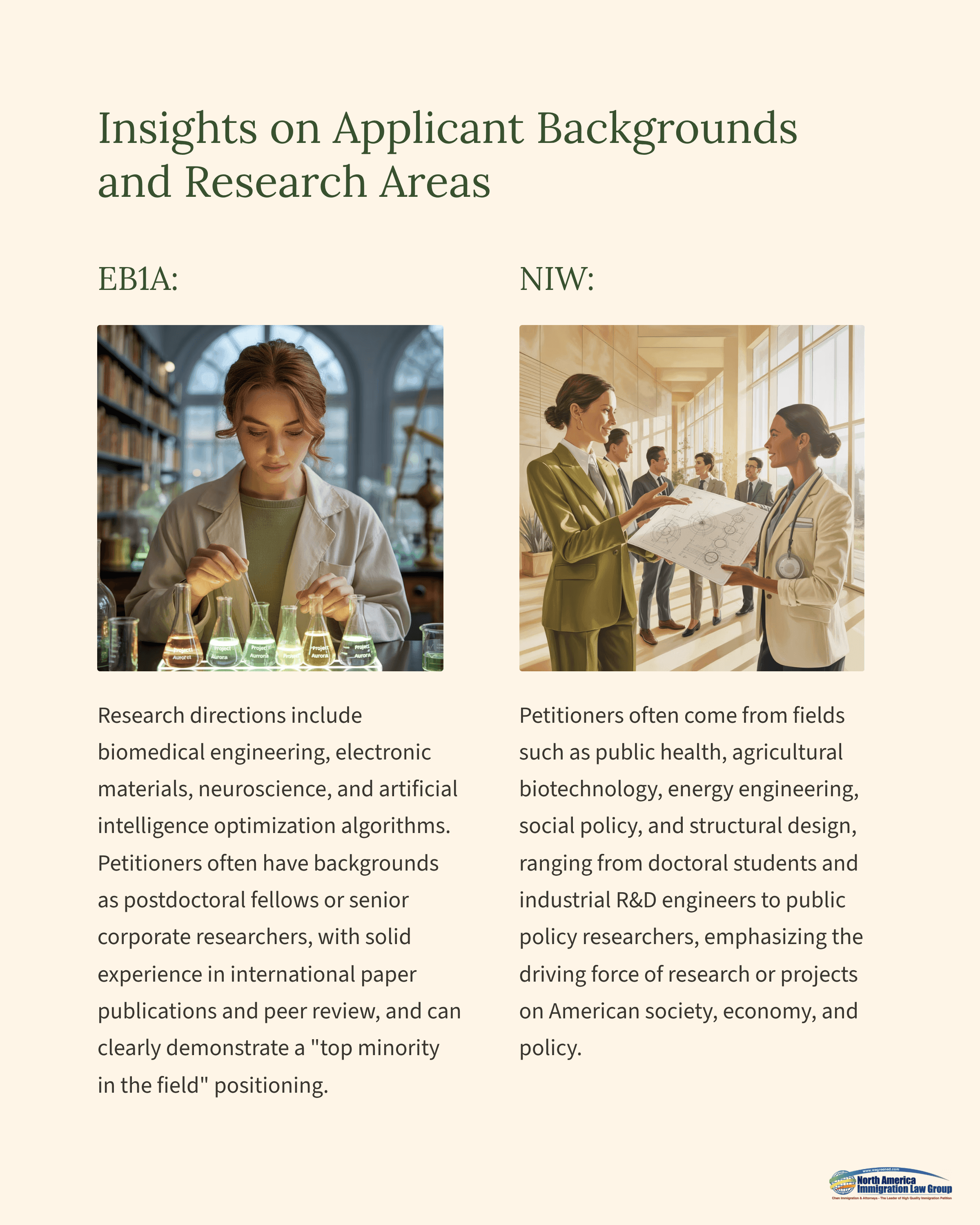
EB1A applicants tend to specialize in fields such as biomedical engineering, electronic materials, neuroscience, and artificial intelligence optimization. Many come from postdoctoral or senior industrial research backgrounds, with a strong presence in international publishing and peer review activities. These profiles often clearly align with the “top percentile” expectation in their disciplines.
NIW applicants are frequently engaged in public health, agricultural biotechnology, energy engineering, social policy, or structural design. Their backgrounds vary from doctoral students and R&D engineers to policy researchers. These cases typically emphasize how their work directly impacts American society, economy, and policy advancement.
Case Study: Low-Citation NIW Approval
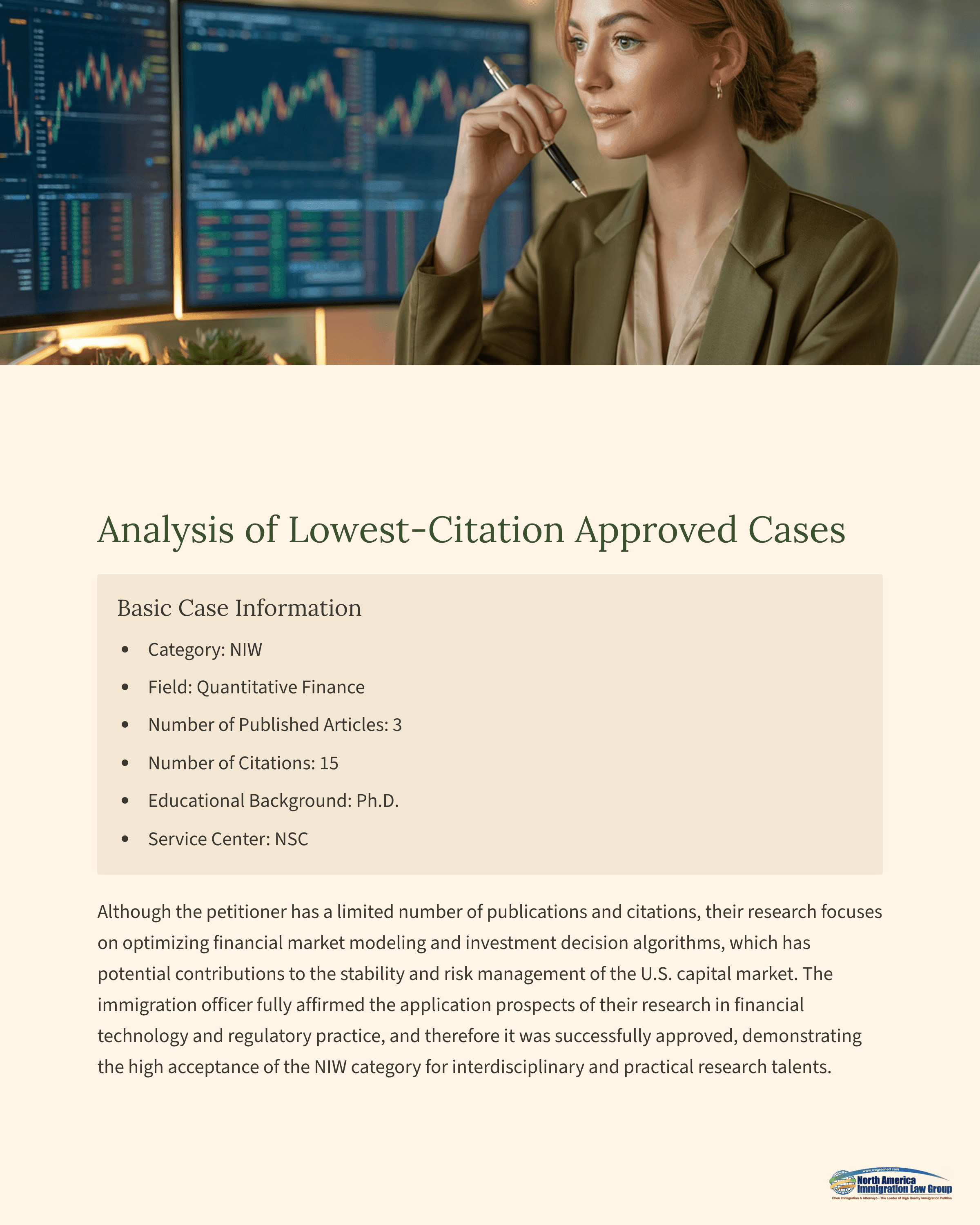
One notable case involved an NIW applicant in the field of quantitative finance, with only three published articles and 15 citations. Holding a Ph.D. and filing through NSC, the applicant focused on optimizing market modeling and investment decision algorithms. Despite limited academic output, their research’s potential contributions to financial stability and regulatory applications were recognized by the immigration officer, leading to a successful approval. This case highlights NIW’s receptiveness to practical, cross-disciplinary research profiles.
Policy and Review Trends
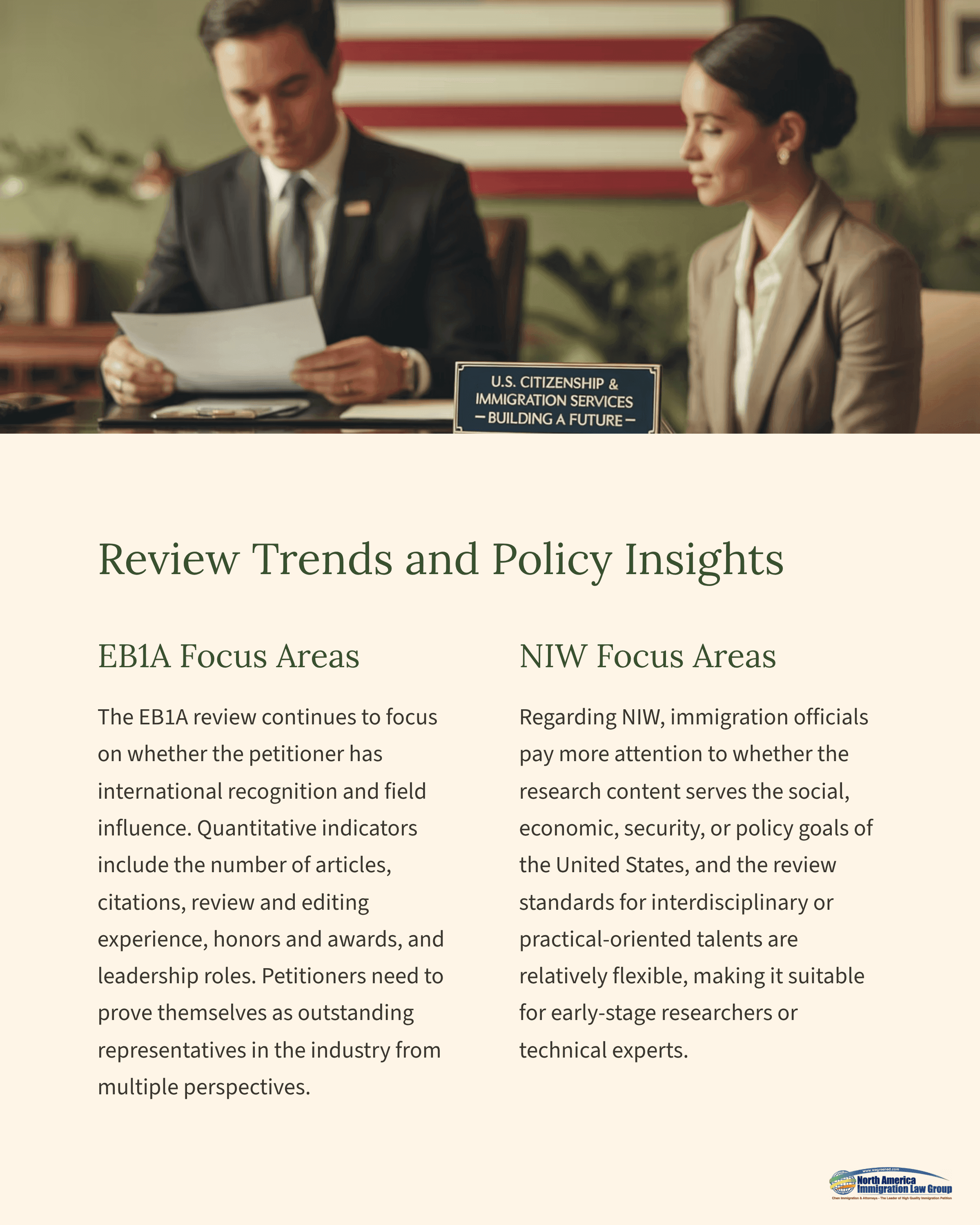
For EB1A, officers continue to focus on international recognition, measurable field influence, and indicators such as publications, citations, peer review roles, awards, and leadership. Applicants must demonstrate excellence from multiple angles.
In the NIW category, evaluators pay closer attention to whether the applicant’s work aligns with the broader social, economic, and policy priorities of the United States. The flexibility in review standards for interdisciplinary and practice-oriented researchers makes NIW especially suitable for early-career scholars and applied experts.