

WeGreened Weekly Approval Summary: Week of April 13, 2026
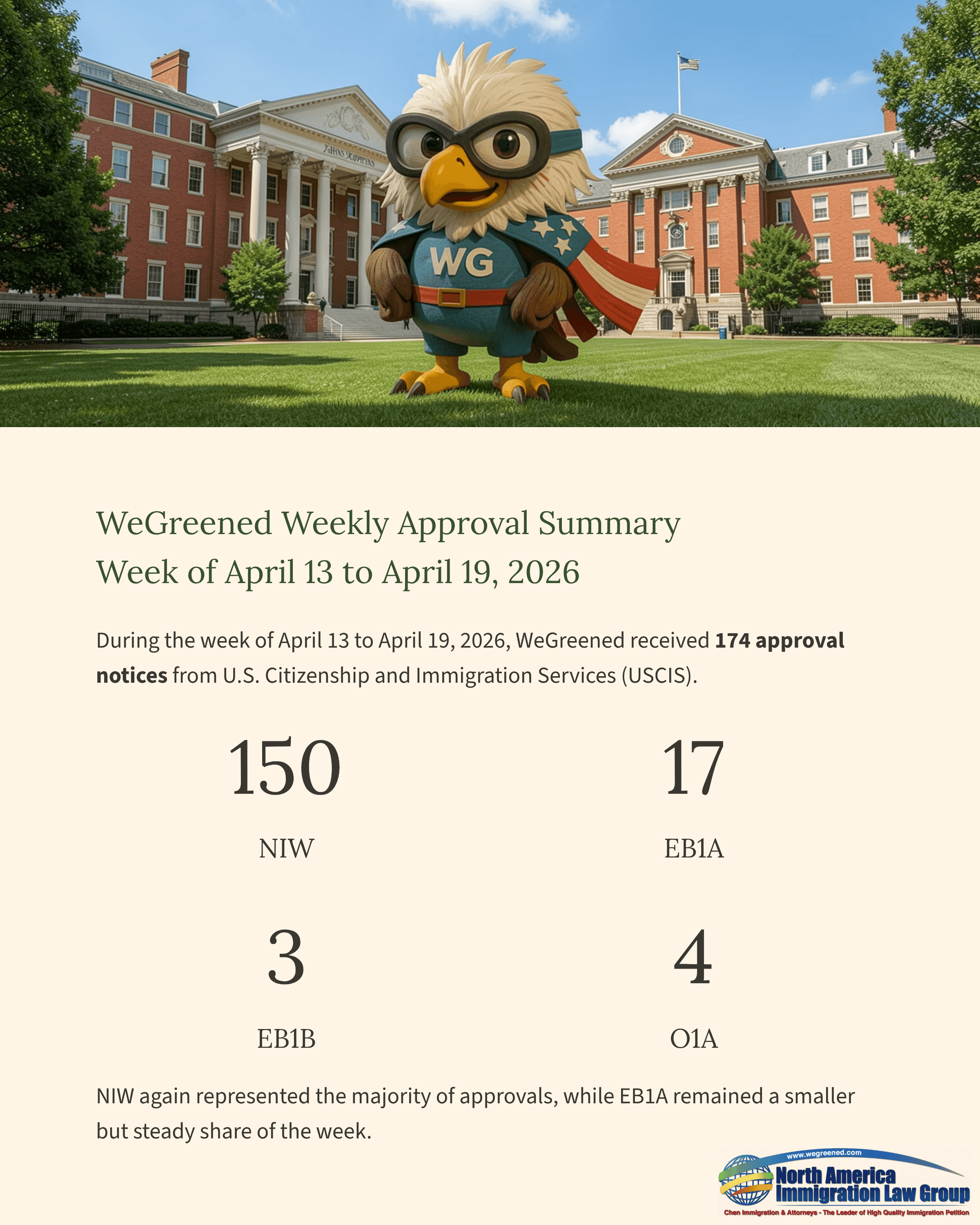
During the week of April 13 to April 19, 2026, WeGreened received 174 approval notices from U.S. Citizenship and Immigration Services (USCIS). Of the 174 approvals, 150 were for NIW (National Interest Waiver), 17 were for EB1A (Alien of Extraordinary Ability), 3 were for EB1B (Outstanding Professors or Researchers), and 4 were for O1A (Individuals with Extraordinary Ability or Achievement).
NIW again represented the majority of approvals, while EB1A remained a smaller but steady share of the week.
EB1A and NIW Credential Analysis
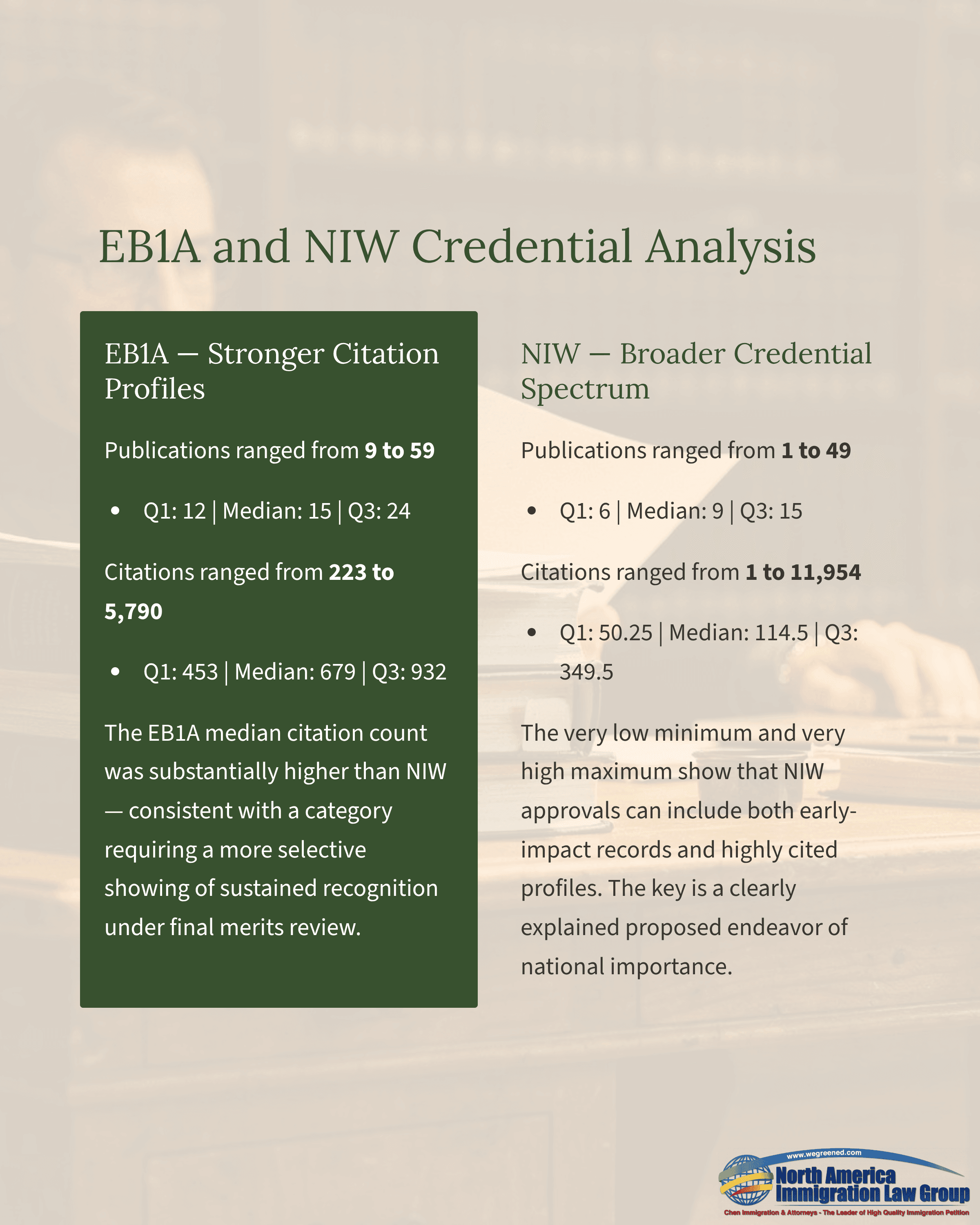
EB1A petitioners this week showed relatively strong citation profiles, while still presenting variation across the group. Publications ranged from 9 to 59 (Q1: 12, median: 15, Q3: 24), and citations ranged from 223 to 5,790 (Q1: 453, median: 679, Q3: 932). The EB1A median citation count was substantially higher than the NIW median, which is consistent with a category that often requires a more selective showing of sustained recognition and top-level standing under final merits review.
NIW petitioners reflected a broader credential spectrum. Publications ranged from 1 to 49 (Q1: 6, median: 9, Q3: 15), and citations ranged from 1 to 11,954 (Q1: 50.25, median: 114.5, Q3: 349.5). The very low minimum and very high maximum show that NIW approvals can include both early-impact records and highly cited profiles. The key distinction is whether the petition clearly explains substantial merit, national importance, the petitioner’s ability to advance the endeavor, and why a waiver would benefit the United States.
Insights on Petitioner Backgrounds and Fields
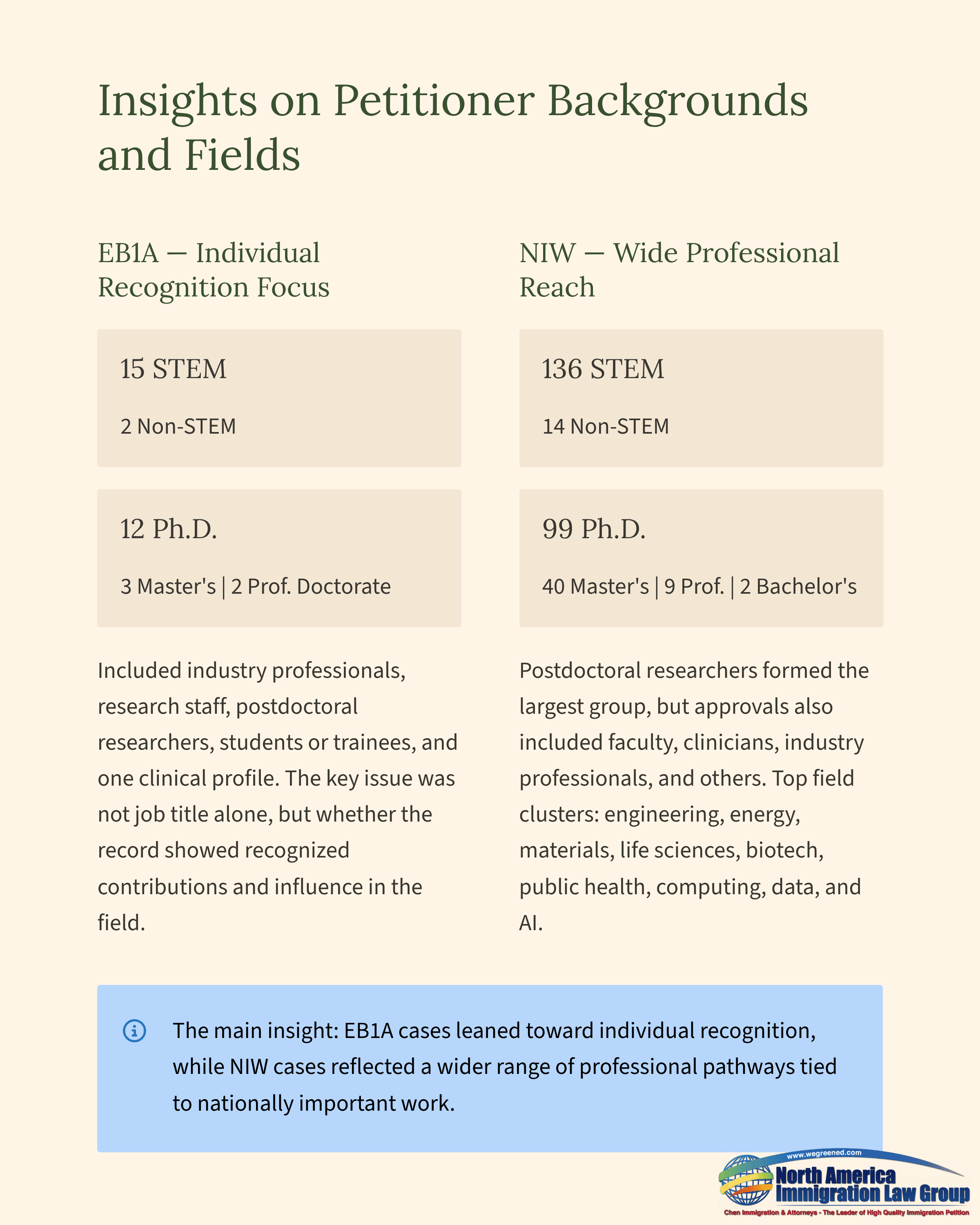
This week’s EB1A approvals show that strong cases can come from both research institutions and industry settings. The group included industry professionals, research staff, postdoctoral researchers, students or trainees, and one clinical profile. This suggests that the key issue was not job title alone, but whether the record could show recognized contributions and influence in the field. EB1A remained strongly STEM-focused, with 15 STEM approvals and 2 non-STEM approvals. The degree mix also stayed concentrated at the advanced level, including 12 Ph.D. holders, 3 master’s-level petitioners, and 2 professional doctorate holders.
NIW approvals showed a different kind of reach. Postdoctoral researchers formed the largest group, but the approvals also included industry professionals, research staff, students or trainees, clinicians, faculty members, and one other professional. This mix reflects the practical flexibility of NIW, especially for applicants whose work can be tied to a clear U.S. need. The strongest field clusters were engineering, energy, materials, life sciences, biotechnology, biomedical work, public health, computing, data, and AI. NIW also remained heavily STEM-oriented, with 136 STEM approvals and 14 non-STEM approvals. The degree mix was broader than EB1A, including 99 Ph.D. holders, 40 master’s-level petitioners, 9 professional doctorate holders, and 2 bachelor’s or exceptional-ability filings without an advanced degree.
The main insight is that EB1A cases this week leaned toward applicants whose records could support individual recognition, while NIW cases reflected a wider range of professional pathways tied to nationally important work.
Highlighted NIW Case: Approved With Only One Citation for an Electrical Engineering Professional
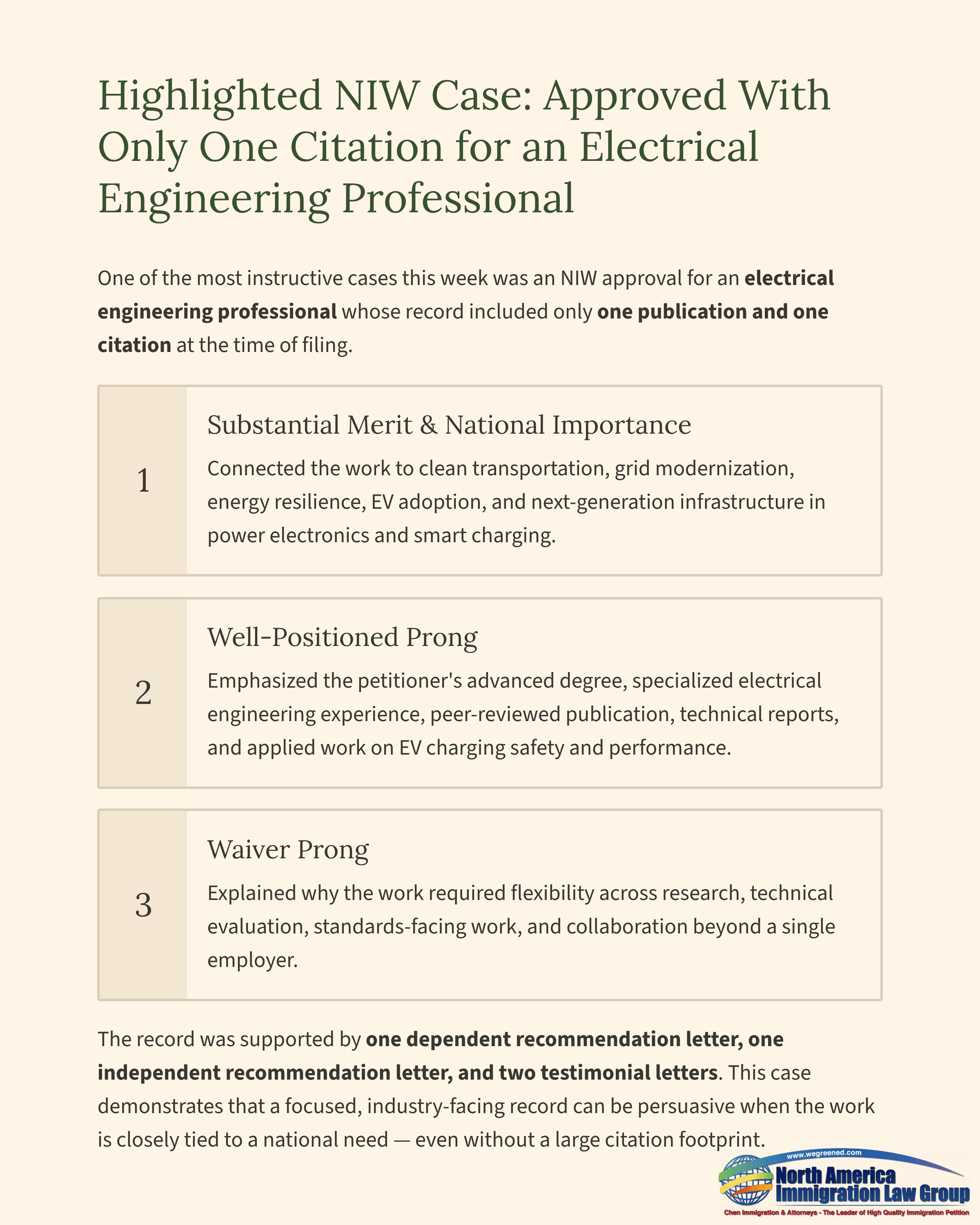
One of the most instructive cases this week was an NIW approval for an electrical engineering professional whose record included only one publication and one citation at the time of filing. Although this was the lowest citation count in the entire dataset, the case was approved because the application did not rely on numbers alone. Instead, it presented a focused proposed endeavor in power electronics, EV charging infrastructure, smart charging, grid integration, and high-voltage hardware testing.
The application addressed the three NIW prongs in a clear and practical way. For substantial merit and national importance, we connected the petitioner’s work to clean transportation, grid modernization, energy resilience, EV adoption, and next-generation infrastructure. For the well-positioned prong, we emphasized the petitioner’s advanced degree, specialized electrical engineering experience, peer-reviewed publication, technical reports, and applied work on EV charging safety and performance.
To strengthen this showing, our team also prepared one dependent recommendation letter, one independent recommendation letter, and two testimonial letters. Together, these letters helped explain the field value of the petitioner’s work, confirm planned research and collaboration, and connect the petitioner’s technical record to continued progress in a nationally important area. For the waiver prong, we explained why the petitioner’s work required flexibility across research, technical evaluation, standards-facing work, and collaboration beyond a single employer.
This approval is a useful reminder that low citations do not automatically prevent NIW success. For industry and applied-research profiles, the strongest evidence may come from technical reports, practical implementation, expert validation, funded projects, testimonial support, and a clear explanation of how the work serves a nationally important need.
Adjudication Trends and Policy Observations
This week’s approvals again show the different logic of NIW and EB1A. NIW continued to support a wide range of citation levels, career stages, and degree backgrounds when the application presented a clear proposed endeavor and credible progress toward advancing it. The highlighted one-citation approval is a good example of how a practical, industry-facing record can be persuasive when the work is closely tied to a national need.
EB1A remained more selective overall, with stronger median citation numbers and records that more often supported sustained recognition in the field. Across both categories, the practical takeaway is fit. The strongest results came when the evidence matched the legal standard, the field of endeavor, and the way USCIS is likely to evaluate the record.