
WeGreened Weekly Approval Summary: Week of April 20, 2026
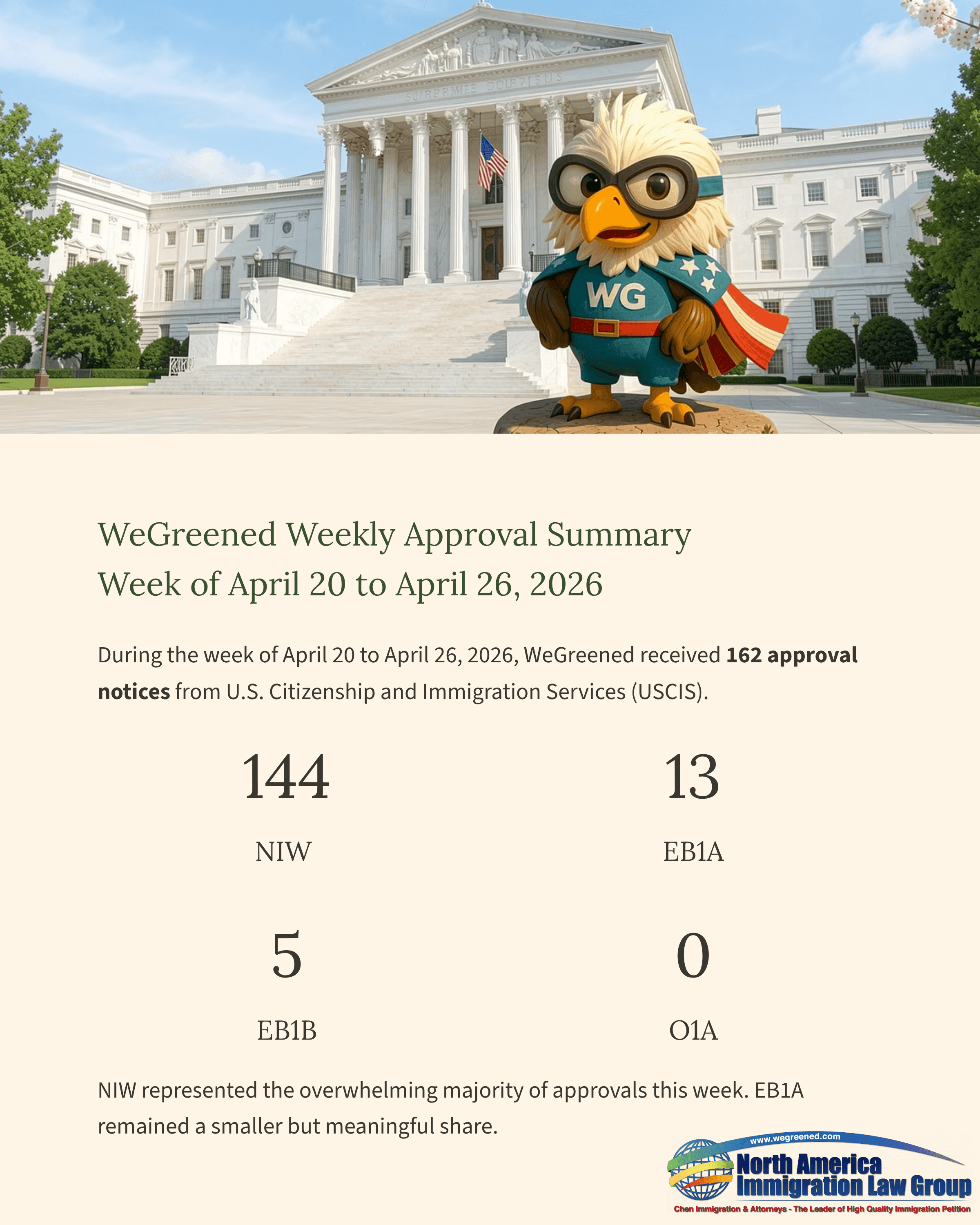
During the week of April 20 to April 26, 2026, WeGreened received 162 approval notices from U.S. Citizenship and Immigration Services (USCIS). Of the 162 approvals, 144 were for NIW (National Interest Waiver), 13 were for EB1A (Alien of Extraordinary Ability), and 5 were for EB1B (Outstanding Professors or Researchers). No O1A approvals were recorded in this week’s approval batch.
NIW represented the overwhelming majority of approvals this week, while EB1A remained a smaller but still meaningful share. EB1B accounted for a limited portion of the batch.
EB1A and NIW Credential Analysis
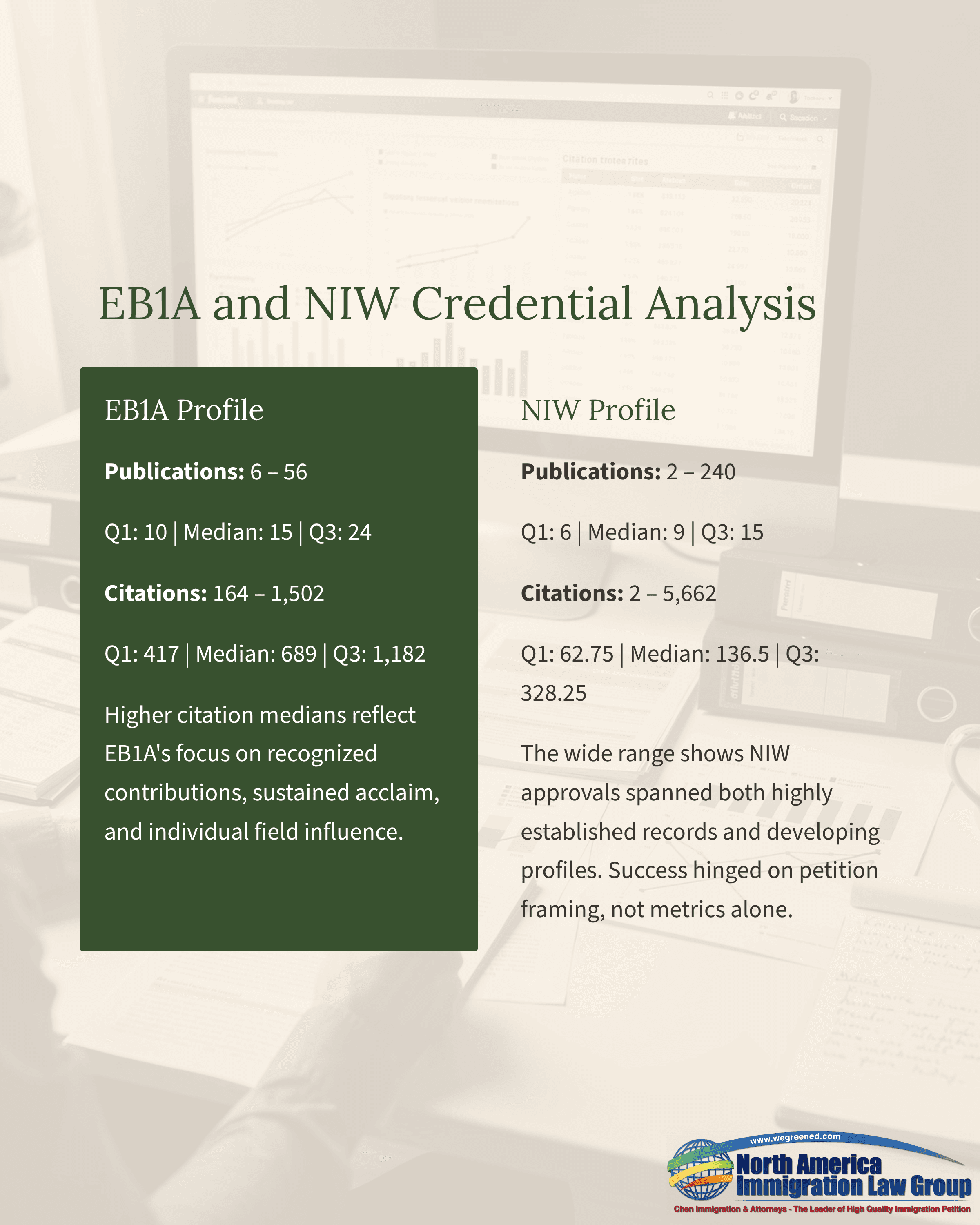
EB1A petitioners this week showed a moderately strong credential profile with some variation across the group. Publications ranged from 6 to 56 (Q1: 10, median: 15, Q3: 24), and citations ranged from 164 to 1,502 (Q1: 417, median: 689, Q3: 1,182). The median citation count was substantially higher than the NIW median, which is consistent with EB1A’s focus on evidence of recognized contributions, sustained acclaim, and individual influence in the field.
NIW petitioners presented a broader evidentiary range. Publications ranged from 2 to 240 (Q1: 6, median: 9, Q3: 15), and citations ranged from 2 to 5,662 (Q1: 62.75, median: 136.5, Q3: 328.25). The wide publication and citation ranges show that this week’s NIW approvals included both highly established records and developing profiles. The key distinction was whether the petition clearly defined the proposed endeavor, connected it to national importance, and showed that the petitioner was well positioned to continue advancing it.
Insights on Petitioner Backgrounds and Fields
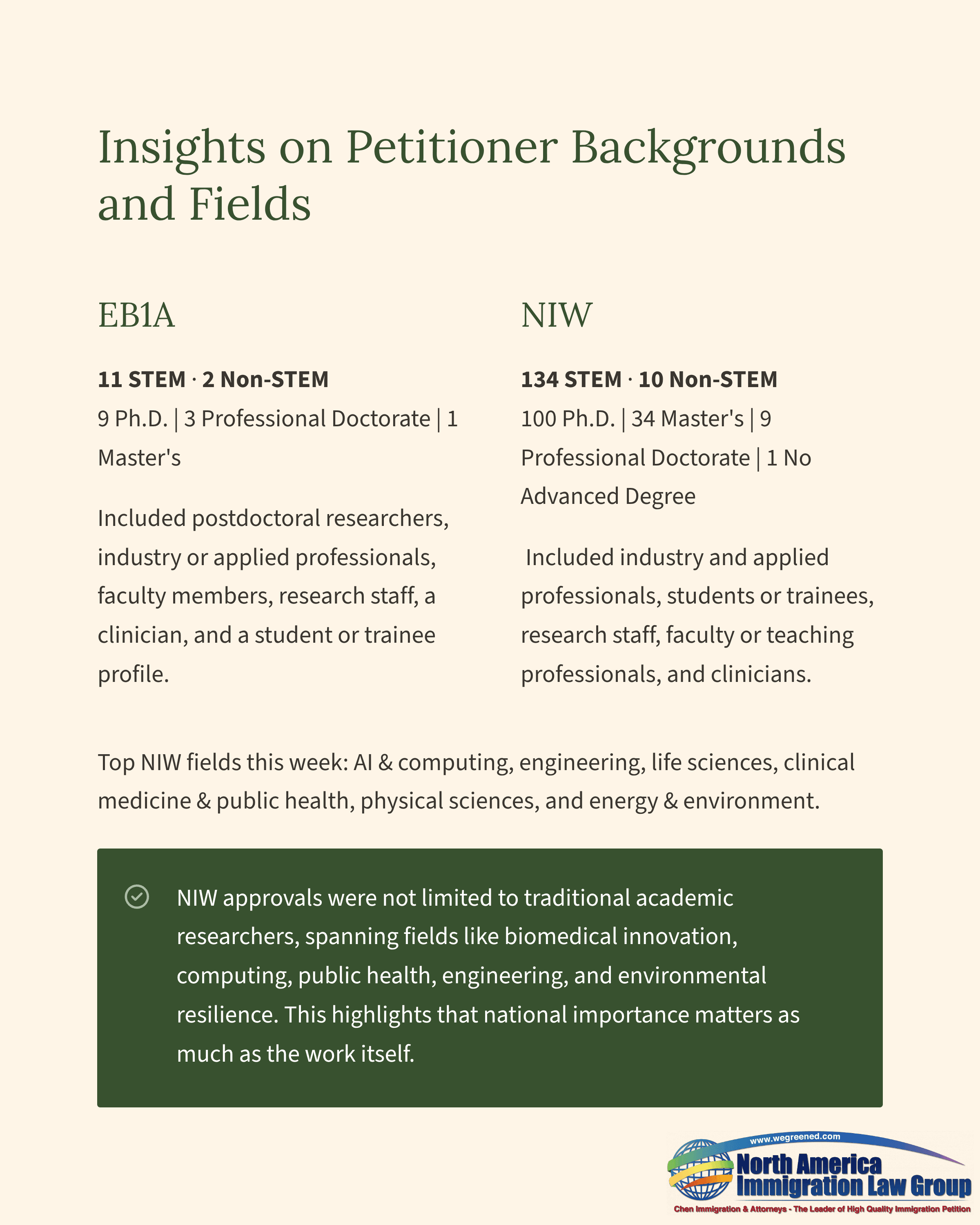
This week’s EB1A approvals show that the category remained concentrated in advanced and recognition-oriented profiles, but the approved backgrounds were not limited to one professional setting. The group included postdoctoral researchers, industry or applied professionals, faculty members, research staff, a clinician, and a student or trainee profile. This mix suggests that EB1A success depended less on institutional title and more on whether the evidence could demonstrate recognized contributions, field influence, and a record strong enough for final merits review. EB1A was heavily STEM-focused, with 11 STEM approvals and 2 non-STEM approvals. The degree mix also stayed concentrated at the advanced level, including 9 Ph.D. holders, 3 professional doctorate holders, and 1 master’s-level petitioner.
NIW approvals covered a broader professional and disciplinary landscape. Postdoctoral researchers formed the largest group, but the approvals also included industry and applied professionals, students or trainees, research staff, faculty or teaching professionals, and clinicians. This week’s NIW batch was especially strong in artificial intelligence, computer science, data-facing work, bioinformatics, biostatistics, electrical engineering, mechanical engineering, biomedical engineering, molecular biology, biochemistry, neuroscience, clinical medicine, public health, materials science, chemistry, physics, agriculture, food science, environmental work, and energy-related fields. NIW was heavily STEM-oriented, with 134 STEM approvals and 10 non-STEM approvals. The degree mix was broader than EB1A, including 100 Ph.D. holders, 34 master’s-level petitioners, 9 professional doctorate holders, and 1 petitioner without an advanced degree.
A notable feature of this week’s NIW results is that the approvals did not cluster only around traditional academic researchers. The batch included applicants whose work was tied to biomedical innovation, computing infrastructure, public health, engineering applications, agricultural systems, environmental resilience, and other practical national needs. This reinforces the importance of explaining not just what the petitioner has done, but why the proposed work matters beyond the petitioner’s immediate workplace or institution.
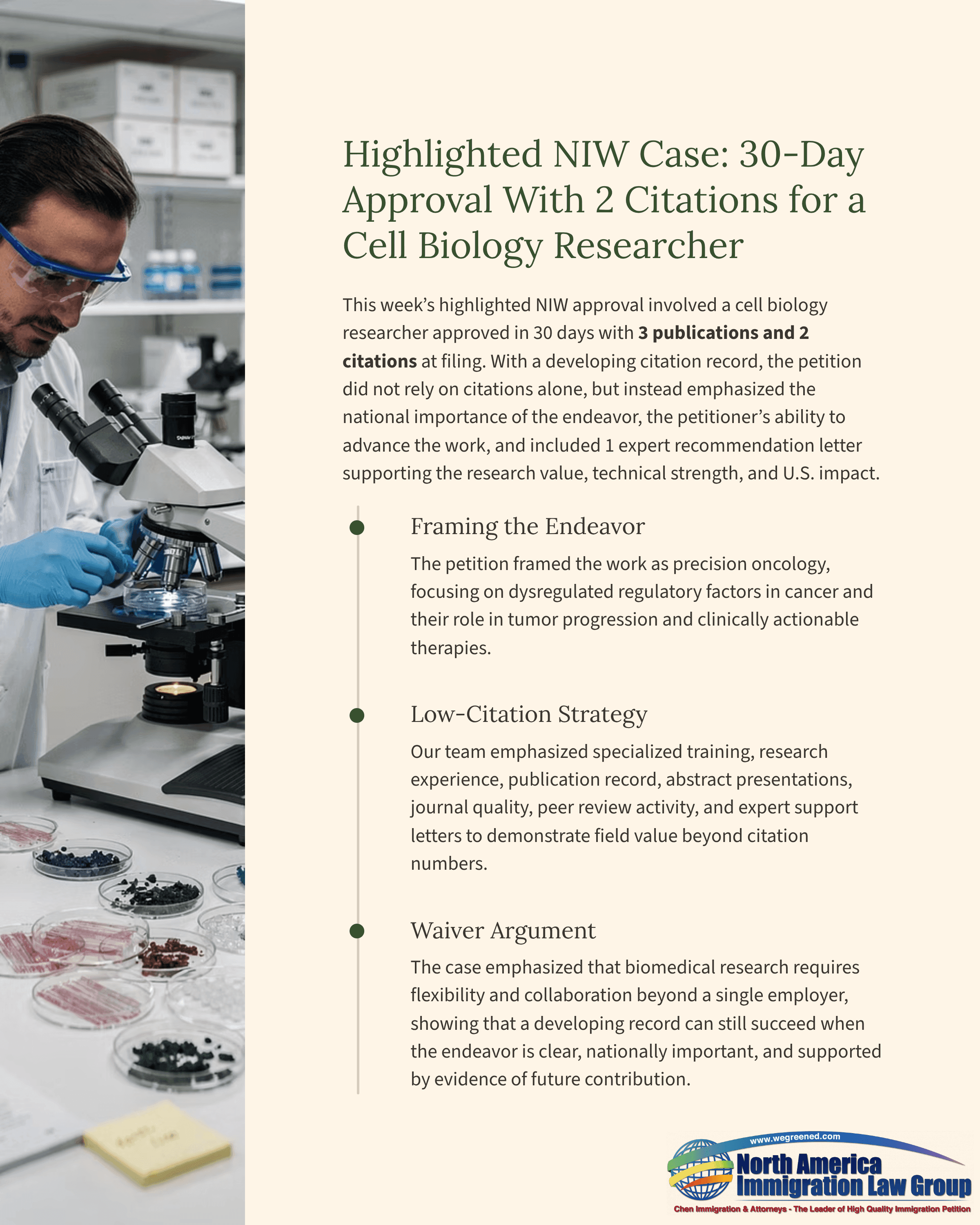
Highlighted NIW Case: 30-Day Approval With 2 Citations for a Cell Biology Researcher
This week’s highlighted NIW approval involved a cell biology researcher whose case was approved in 30 days with 3 publications and 2 citations at the time of filing. Because the citation record was still developing, the petition focused on the national importance of the proposed endeavor and the petitioner’s ability to continue advancing it.
The proposed endeavor centered on studying regulatory factors that become dysregulated across specific cancer types. Rather than presenting this as general cancer research, the petition framed the work as part of precision oncology because it aimed to clarify mechanisms of tumor progression and support clinically actionable therapeutic strategies.
To manage the low citation count, our team emphasized the petitioner’s specialized training, research experience, publication record, abstract presentations, journal quality, peer review activity, and expert support. We also included one expert recommendation letter, which helped explain the importance of the petitioner’s work, the strength of the petitioner’s technical skillset, and why continued research in this area would benefit the United States. This support was especially useful because the petition needed to show field value and future potential beyond citation numbers alone.
For the waiver argument, the petition stressed that biomedical research in this area requires flexibility, collaboration, and mobility that may not be fully supported by the labor certification process. The case shows how a developing research record can still be persuasive when the endeavor is specific, nationally relevant, and supported by concrete evidence of the petitioner’s ability to advance the field.
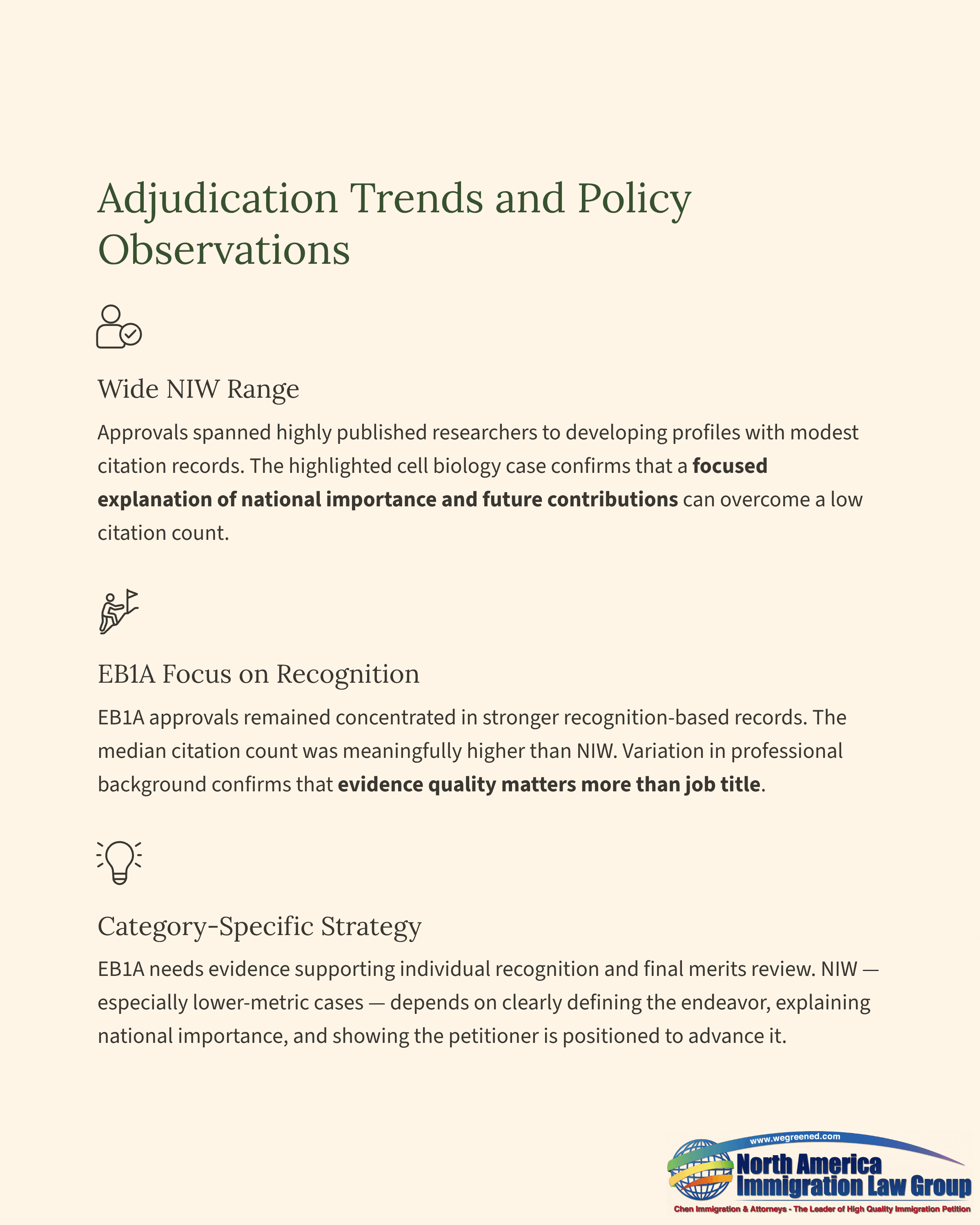
Adjudication Trends and Policy Observations
This week’s approvals showed a wide NIW range, from highly published and highly cited researchers to developing profiles with modest citation records. The approval of the highlighted cell biology case is particularly significant because it involved a low citation count and a developing research profile, yet the petition was approved through a focused explanation of national importance, technical ability, and future contributions.
Second, this week’s EB1A approvals remained more concentrated in stronger recognition-based records. The EB1A median citation count was meaningfully higher than the NIW median, and the approved profiles generally fit a category where sustained recognition and individual influence are central to the case theory. At the same time, this week’s EB1A group showed variation in professional background, confirming that the strength of an EB1A case depends on the quality and organization of the recognition evidence rather than job title alone.
The broader drafting lesson is that each category requires a different evidentiary emphasis. EB1A cases generally need evidence that can support individual recognition and final merits review. NIW cases, especially lower-metric ones, depend on whether the petition can clearly define the proposed endeavor, explain why it matters to the United States, and show that the petitioner is well positioned to advance it. This week’s results show that when the legal theory is specific and the evidence is organized around the correct standard, even a developing record can support a successful NIW approval.